
Why new construction feels far more stressful than most buyers expect -and how to know whether it’s the right choice for you.
I need to tell you something nobody explains clearly enough before buying a new construction home or signing a construction contract.
You are not buying a finished home.
You’re buying your ability to tolerate a process.
The marketing materials show you the kitchen. The renderings show you the layout, the lighting, the promise of customization. The emotional pitch centers on a fresh start, on building something you own. All of this is real. But what’s missing from the narrative is the lived experience between signing and move-in.
The gap is where the real stress lives.
Buyers consistently underestimate the gap, especially when they enter construction looking for emotional certainty. They assume: “Once we sign, we’ll finally feel settled.” In reality, many feel less settled for months because the process introduces timeline uncertainty, financial creep, decision fatigue, appraisal anxiety, supply delays, changing priorities, communication gaps, and constant micro-decisions.
You’re effectively managing a temporary state of controlled instability while trying to build a future version of your life.
The Reality Nobody Mentions: Construction Delays Are the Rule
Let me start with the numbers validating what you probably already suspect.
98% of construction projects face delays. The average project duration extends 37% longer than originally projected in North America. A separate survey found 85% of new construction buyers experience some type of delay, with 50% waiting three months or longer.
Look at what this means. You signed a contract with an expected move-in date. You gave notice on your rental. You told your kids about their new school. You planned around the timeline. And then you’re told to wait another three months.
The house doesn’t care.
The timeline you were given was always an estimate, not a guarantee. But the emotional weight you placed on the date was real. And now you’re managing the gap between expectation and reality while still paying rent, or juggling a bridge loan, or living with family.
Timeline Uncertainty When Buying a New Construction Home
The average home construction time in the United States is 6 to 12 months for the building phase alone. Total project timelines from planning through move-in typically extend to 9 to 18 months, depending on home type, permit approval processes, and regional factors.
But here’s what makes this more unpredictable: the time between permit approval and construction start has grown. In 2019, 43% of single-family homes began construction before or in the same month as authorization. By 2024, the share had declined to 37%.
You’re not just waiting for construction to finish. You’re waiting for construction to start.
In markets like St. John’s, weather, labor availability, and permit delays all compound this uncertainty. Processing times range from 2 weeks in streamlined suburban jurisdictions to 6+ months in backlogged urban markets.
The Psychological Toll Is Higher Than You Expect
I’ve been involved in over 250 builds in the St. John’s area over the past 8 years. I represented a large builder exclusively for 5 years. I’ve watched the same patterns play out dozens of times. The stress is real, and the stress is measurable.
Seventy-one percent of first-time homebuyers said the home buying process was more stressful than landing their first job. 59% said the process was worse than wedding planning. New construction adds layers of complexity resale transactions don’t have.
Over one in five buyers experienced stress around uncertainty of completion dates (22%), while 22% also felt emotional stress about their purchase falling through. You’re managing a project with significant financial, logistical, and emotional stakes. And you don’t have full control over the timeline.
Financial Creep Is a Documented Phenomenon
Here’s where the process gets expensive in ways you didn’t plan for.
The potential to go over budget is a significant disadvantage in new construction. Upgrades and add-ons, unforeseen delays due to weather, supply chain issues or labor shortages, and expenses like landscaping and fencing not included in the builder’s cost will affect the final price.
Custom window packages have 8 to 14 week lead times. Windows arriving late is the single most common cause of framing-phase delay in the 2024-2026 market. So you upgrade your windows. The decision delays framing. Framing delays push back electrical. Electrical delays push back drywall. Suddenly your move-in date has shifted by two months, which means two more months of rent.
The upgrade cost you more than the price difference. The upgrade cost you time, which cost you money, which cost you peace of mind.
Decision Fatigue Has Time and Money Consequences
Making numerous decisions during construction prolongs the project’s duration, leading to increased rental or mortgage expenses for the client and overall project costs.
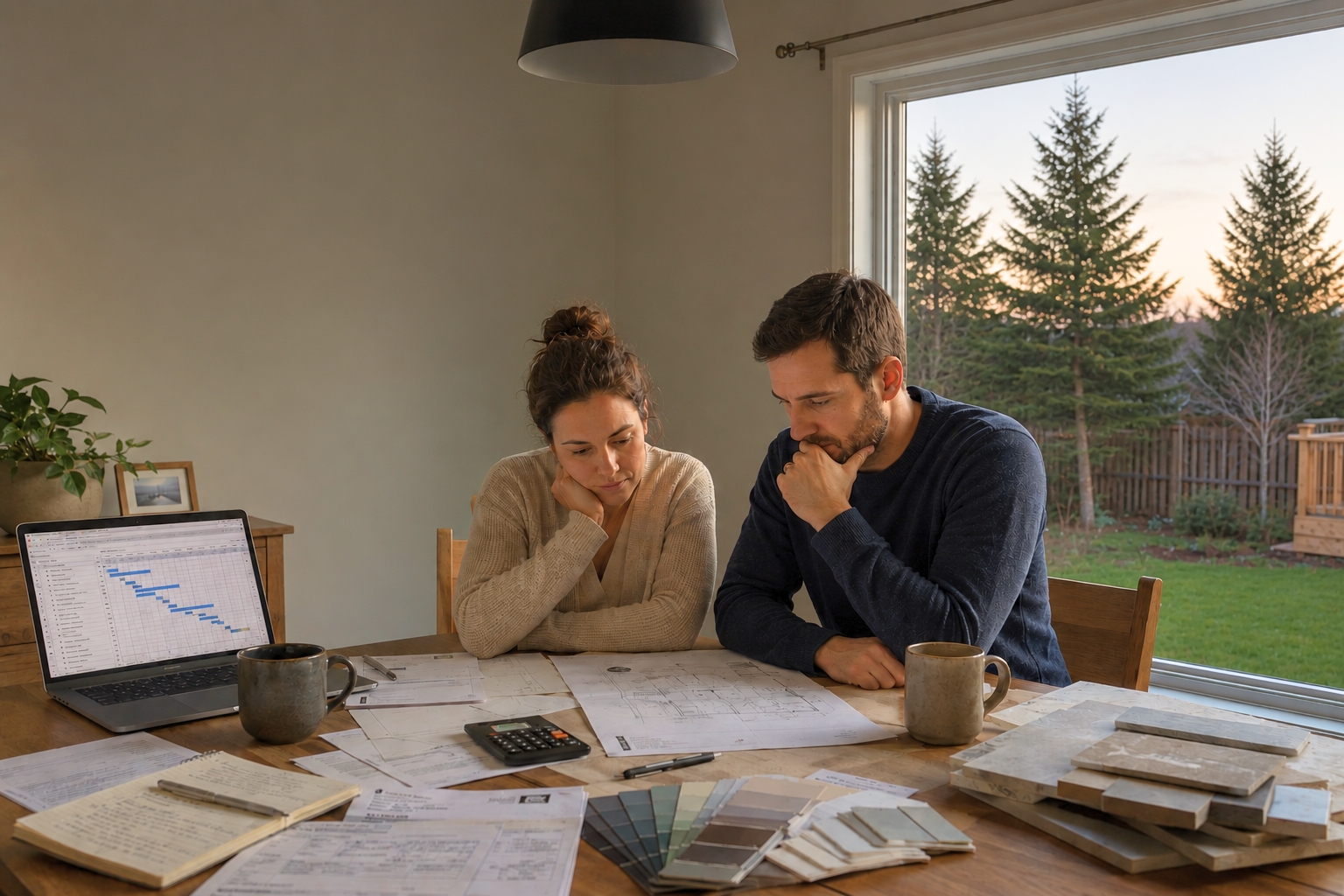
You’re asked to make decisions about things you’ve never thought about before. Cabinet hardware. Grout color. Light fixture placement. Outlet height. Trim style. Paint sheen.
Each decision feels small in isolation. Cumulatively, they create a mental load wearing you down over months.
And here’s the part nobody explains: you’re making these decisions for a future version of your life you don’t fully visualize yet. You’re choosing finishes for a kitchen you’ve never cooked in, based on renderings and samples.
Some people thrive in the environment. They love the customization and the creative control. But for many buyers, especially those who entered construction seeking certainty, the constant decision-making becomes exhausting.
Supply Chain Disruption Creates “Controlled Instability”
Over the past year, construction input prices have risen 4.4% overall in Newfoundland and Labrador, and around 70% of contractors have been affected by tariffs, with some materials like primary metals climbing far higher depending on exposure to trade policy and global supply constraints.
Higher material and transportation costs are being passed downstream, contributing to increasing home prices and project bids. Everything from residential move-ins to commercial openings are being delayed by extended lead times.
You signed a contract with a price. But if your builder encounters material shortages or price increases, you might be asked to absorb some of those costs, depending on how your contract is structured. You don’t have control over global supply chains. But you’re affected by them in personal ways.
What New Construction Buyers Should Expect
I’m not trying to talk you out of new construction. For many people, new construction is the right choice. The ability to customize, the warranty coverage, the modern efficiency standards, the opportunity to build what you need: those benefits are real.
But I am trying to prepare you for the reality of the process.
If you’re entering new construction because you want certainty, understand the certainty comes after the instability. The finished home will be yours, built to your specifications. But getting there requires navigating a process with inherent uncertainty. You need to be comfortable with the trade-off.
You need financial margin for delays. You need emotional capacity for decision fatigue and timeline shifts. You need a clear understanding of what’s in your contract and what’s not.
The people who do well in new construction go in with their eyes open. They budget for overages. They plan for delays. They understand the process will be messy, and they’re okay with the mess because the end result is worth going through.
The people who struggle are the people who expected the process to feel settled and certain from the moment they signed. They thought the hard part was making the decision. In reality, the hard part is managing the months between decision and delivery.
How to Think About This Differently
If you’re considering new construction, here’s what I’d suggest:
Ask yourself why you’re choosing new construction. If the answer is “because I want certainty,” consider carefully whether you’re prepared for the uncertainty coming first.
Build margin into your timeline and budget. If your builder says 9 months, plan for 12. If your budget is $500,000, make sure you have access to another $50,000 for upgrades and unexpected costs.
Limit your customization decisions. If you struggle with too many choices, customize only what matters most to you and accept builder-grade defaults for everything else.
Read your contract carefully. Understand what happens if there are delays, what’s included, and how change orders work.
The house doesn’t care. But you do. And that’s why understanding the process before you commit to it matters so much.
If you’re thinking about new construction and you want to talk through whether new construction is the right fit for your situation, let’s have a conversation. I’ll help you work through the trade-offs and figure out what makes sense for where you are right now.