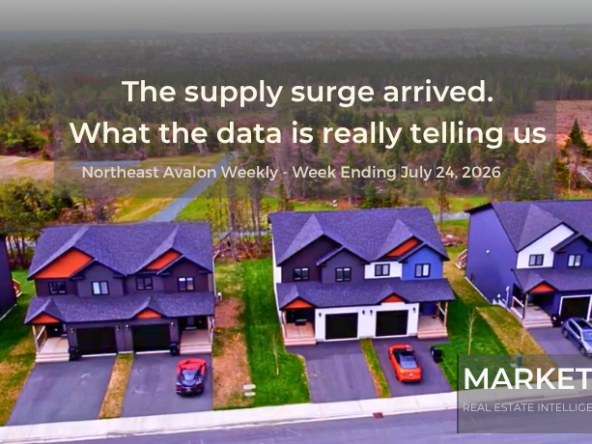


Rising inventory isn’t the same thing as a falling market
I’ve had the same conversation with sellers repeatedly over the past few weeks.
Inventory is rising, and almost every homeowner asks some version of the same question:
“Did I miss my window?”
It’s a fair question. But it’s actually the wrong one.
What rising inventory really means
We’re coming out of a stretch where almost every listing had little competition. Buyers had fewer choices. Sellers held most of the leverage. That was the reality through late 2024 and into early 2025, and it shaped a lot of people’s expectations about how this market works.
When inventory starts to build, it doesn’t automatically mean home values are falling. More often, it means the market is becoming healthier. Buyers finally have real choice, and conditions that were unusually tight for years are beginning to normalize.
The market hasn’t turned against sellers. It has moved.
The sellers who recognize that shift are in a much better position than those still waiting for April to come back.
What the numbers are showing
Over the past three weeks, new listings have consistently outpaced buyer activity. Active inventory has grown from 368 to 426 homes, while buyer pipeline activity weakened in early July and has only partially recovered.
One week can be noise. Three consecutive weeks suggest a trend.
Supply has been arriving faster than buyers are committing for three straight weeks. That’s the real story—not collapsing prices or a market in trouble. It’s a gradual shift in negotiating leverage, and leverage is very different from price.
Buyer psychology usually shifts before prices do. The current data suggests that’s beginning to happen.
Median sold prices remain higher than a year ago, and transactions are still closing. What’s changing is negotiating leverage, and where you sit in the market determines how much that shift affects you.
What this looks like on the ground
Mount Pearl is the clearest exception right now. Pipeline activity exceeded new listings last week, with a pipeline pressure reading of 0.72. It’s the strongest seller market in the CMA, with demand continuing to absorb new supply. If you’ve been considering listing in Mount Pearl, conditions remain very favourable.
In much of St. John’s, buyers have more time, more choice, and less pressure than they did earlier this spring. That shift is most noticeable in central and west-end detached homes.
In Conception Bay South and Paradise, supply is building faster than demand is absorbing it. CBS Chamberlains-Manuels recorded ten new listings last week without a single pipeline transaction. Sellers who are still priced for the spring market are encountering resistance that simply didn’t exist three months ago.
The market doesn’t move as one. The same region can produce very different conditions depending on the neighbourhood, and sometimes even the street.
The market doesn’t move as one. The same region can produce completely different conditions depending on the neighbourhood, and sometimes even the street.
What to do with this
Every market goes through phases, and transitions rarely feel clean while you’re living through them. It’s worth understanding what’s changing rather than reacting emotionally.
If you’re selling, pricing accuracy matters more now than it did three months ago. Buyers have options, and they’re comparing carefully. Well-presented homes at the right price are still moving well. Homes priced for April are sitting longer than expected, and that gap tends to widen the longer it goes unaddressed.
If you’re buying, you have more selection than you’ve had in years. The $500,000 to $700,000 range deserves particular attention, as inventory is expanding and negotiating conditions have improved. If you’re considering CBS or Paradise, the current data supports taking your time, writing conditions, and comparing properties carefully before committing.
The opportunity isn’t to wait for prices to fall. It’s to be more deliberate about what you’re willing to compete for.
A more balanced market isn’t a broken one. It’s simply a different set of rules.
If you’re trying to understand what this shift means for your neighbourhood or your timeline, I’m happy to walk through the numbers with you.
No sales pitch. Just a conversation about what the data actually means for your situation.
Remember, I’m never to busy to help someone with their next move!
Ted
More St. John’s Real Estate Market Analysis
Market Pulse™ is my ongoing analysis of the St. John’s and Northeast Avalon real estate market, combining weekly MLS data with local market activity to understand what is changing beneath the headline numbers.